
Pigments application

 The photoluminescent pigments we sell are classified into seven groups: A, B, C, D, E, F, G. Pigments of different groups are different in chemical composition, which determines their different properties and application. It is important to pay attention at the size of pigment particles – the pigments of the same group differs between each other by the size of particles. E.g., P-21 and P-24 belongs to the group F, P-21 average particle size is 20-50 um, and P-24 particle size is 5-8 um. While selecting pigment, it is important to know where it will be applied. E.g., pigment P-21 is recommended to be applied into luminescent paints, and P-24 (containing very small particles) into silk-screen printing, textile.

Luminescent paints

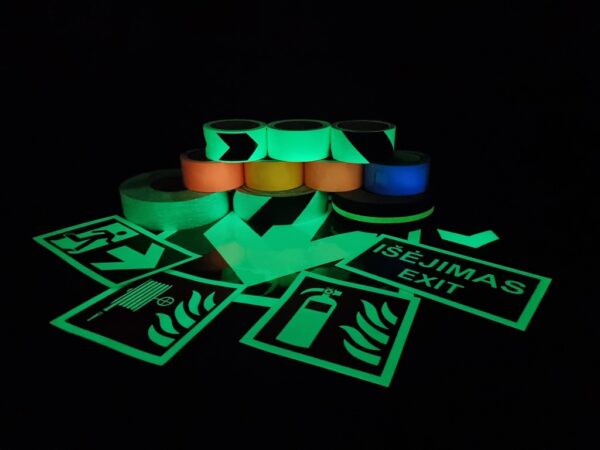
Photoluminescent pigments are mixed with various varnishes and paints and made into luminescent paints. Such luminescent pigments can endow the paints with the function of luminescence in darkness. It is enough for these paints to absorb light for 10-30 min and they can illuminate in the dark for more than 12 hours (the glowing time depends on the type of the pigment). The process of light-absorption and light-emission can be repeated infinitely. The illumination of luminescent paints can remain for more than 5 years, after this period the intensity of brightness becomes lower.

Application of photoluminescent pigments in silk-screen printing

Luminescent printing ink is processed out of luminescent paints, organic resins, organic solvents and assistants through a series of techniques. Each of these elements is essential to determine the performance of the pigments, thus the standard for selection is important. Due to the requirements of the surface of presswork and the permeation of silkscreen, it is necessary to choose printing ink for silkscreen. The printing ink should be colourless or transparent to get better glowing effect. For the higher brightness of silk-screen printing ink it is recommended to apply it on white background. It is recommended to use he mesh 80-150 for silk-screen printing: for thick layer – 80 mesh, for thin layer – 150 mesh. For better luminance the printing can be repeated 2-3 times.

Pigments which are fit for silk-screen printing: P-02, P-03,  P-07, P-10, P-13, P-14, P-13, P-15, P-16, P-17, P-19, P-20, P-24, P-25, P-26, P-27, P-28, P-29.

Pigments which are not fit for silk-screen printing: P-01, P-05, P-11, P-12, P-18, P-21, P-23.

Application of photoluminescent pigments in silicon rubber

Photoluminescent pigments can be applied in silicon rubber. Luminescent pigments can endow silicon rubbers with the function of illumination in darkness. When luminescent pigments are used in silicon rubbers, the silicon rubber products will have a higher luminance due to the high transparency of basal resins.

Pigments which are fit for aaplication in silicon rubber: P-01, P-02, P-03, P-06, P-07, P-20, P-21, among which P-02 and P-07 are of higher luminance and strong comprehensive performances.

 Application of photoluminescent pigments in cast resins

Photoluminescent pigments can be cast into resins and made into luminescent resins, which can directly be made into all kinds of arts and crafts. Such casting products can emit fluorescence for more than ten hours (depending on the type of pigment) after they receive daylight and lamplight for only 10 to 30 minutes.

Application of photoluminescent pigments in plastics

Photoluminescent pigments can be generally used in plastics. Being a performance material, the luminescent pigment can be appended into plastic resins and cast into all kinds of plastic products through injecting, compressing and blow molding.

Application of photoluminescent pigments in stamp pastes

Photoluminescent pigments can be mixed into stamp pastes to make into printwork (e.g. ornament, picture) for textile materials. Such printing patterns can continuously emit fluorescence for more than twelve hours (depending on the type of pigment) after they receive daylight and lamplight for only 10 to 30 minutes